


Never-before-seen high-resolution images of the sunken wreck of the US Civil War vessel Monitor have been revealed.
In September 2025, as part of Northrop Grumman’s Technology for Conservation initiative, the company and the US National Oceanic and Atmospheric Administration partnered to scan the historic ocean-floor site, capturing shipwreck imagery and evolution details about the current health of the sanctuary.
The wreck, discovered in 1973 and designated as the country’s first National Marine Sanctuary by NOAA in 1975, rests nearly 240 feet/73 meters below the ocean’s surface.
NOAA monitors the health of the sanctuary and was in search of readily available technology to more closely evaluate the status of the site. Northrop Grumman’s µSAS (pronounced “micro-SAS”) technology, a micro synthetic aperture sonar, provided exactly that unique capability.
Using acoustics, µSAS produced detailed imagery of the seafloor capturing the highest resolution images to-date of the USS Monitor wreck.
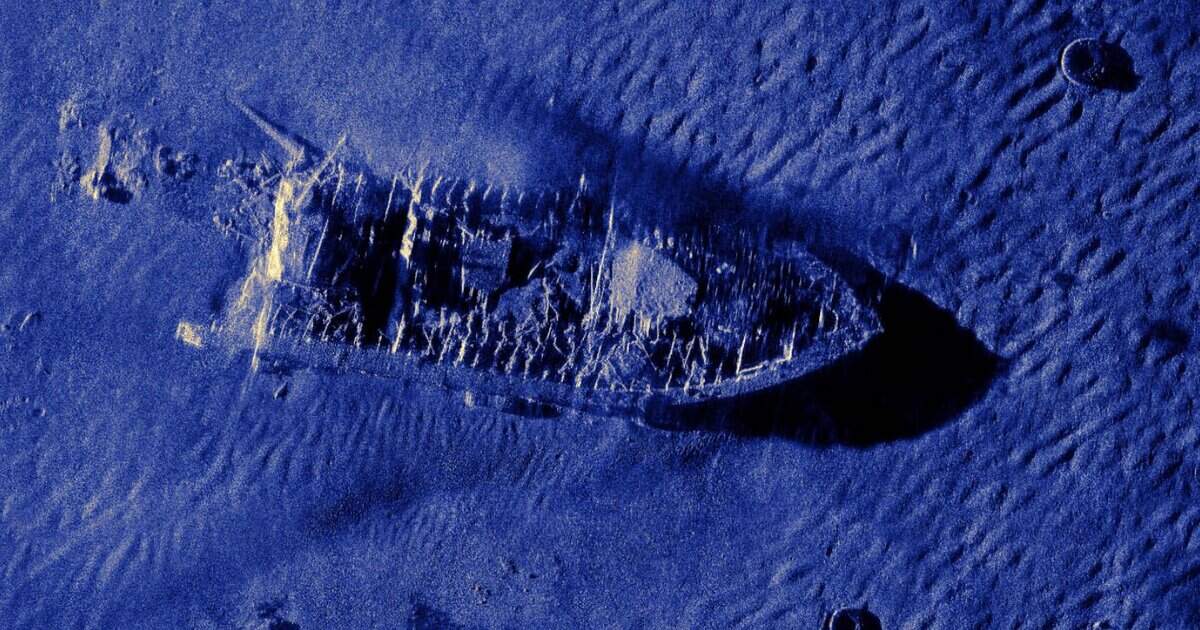
The Northrop Grumman team also created 3D digital and physical models for NOAA, including a depiction of the Monitor’s timeline from afloat in 1862 through its sinking and major recoveries to its current state as a national marine sanctuary.
Kevin Gallagher, sonar architect on Northrop Grumman’s µSAS team, said:
“Our advanced µSAS sensor technology gives us a clear, detailed look at the USS Monitor for the first time since 1862—capturing the ship’s hull, interior, and surrounding debris through murky water. This breakthrough shows how Northrop Grumman’s leadership in cutting-edge sensing expands what’s possible, not just in aerospace and defense, but in exploring and preserving history.”
While John Armor, director of NOAA’s Office of National Marine Sanctuaries, added:
“Public-private partnerships like the one with Northrop Grumman help support NOAA’s role as steward of the USS Monitor’s historic legacy and as a testbed for new technologies. The Monitor was a technological marvel of its day, and it continues to serve the nation today by showcasing new technologies, scientific innovations, and groundbreaking educational programs. Thanks to Northrop Grumman’s advanced scanning and digital reconstruction capabilities, the public will now be able to view images of the Monitor with near-photographic resolution and extreme three-dimensional accuracy. These products provide a valuable baseline for future monitoring and will inspire the next generation of marine scientists and archaeologists alike.”

