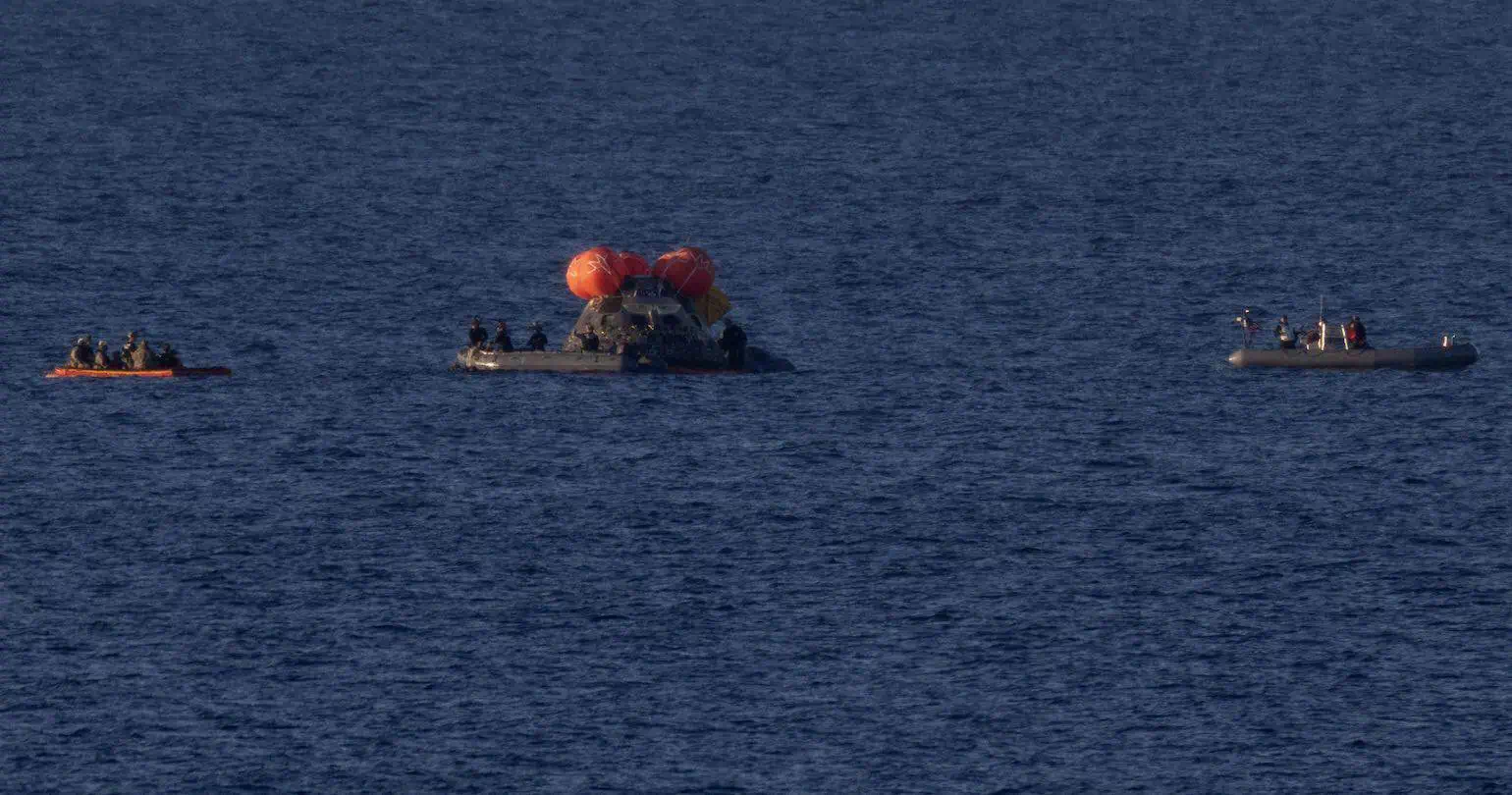



If something had gone wrong during reentry, the Artemis II crew could have been forced to exit the capsule into open ocean. That’s why NASA equipped astronauts with specially designed life preservers worn during reentry and recovery as a contingency system.
Artemis II, the first crewed lunar flyby mission in more than 50 years, launched April 1, 2026. The nine-day mission sent four astronauts on a free-return trajectory around the Moon before returning to Earth, validating spacecraft systems, crew operations and procedures required for future deep-space missions.

While the public attention surrounding Artemis II focused on launch and deep-space flight, astronaut safety during Earth return and recovery was a critical component of mission design. Following splashdown, crews had to safely egress the Orion capsule and remain supported in the water until recovery forces were able to complete operations. NASA required failsafe flotation technology in the event of unforeseen post-landing complications.
NASA selected Omni Measurement Systems to design and provide life preserver units specifically for astronaut use during splashdown and recovery.
Unlike standard military flotation equipment, the Artemis II configuration can withstand the pressure changes associated with space travel, integrates with astronaut recovery equipment and maintains a low-profile design to minimize interference during critical post-landing activities.
Omni CEO Mark Harvie said:
“Every phase of a mission matters, including what happens after the spacecraft returns to Earth. NASA’s selection highlights our ability to take proven flotation technology and adapt it to the precise needs of human spaceflight.”