


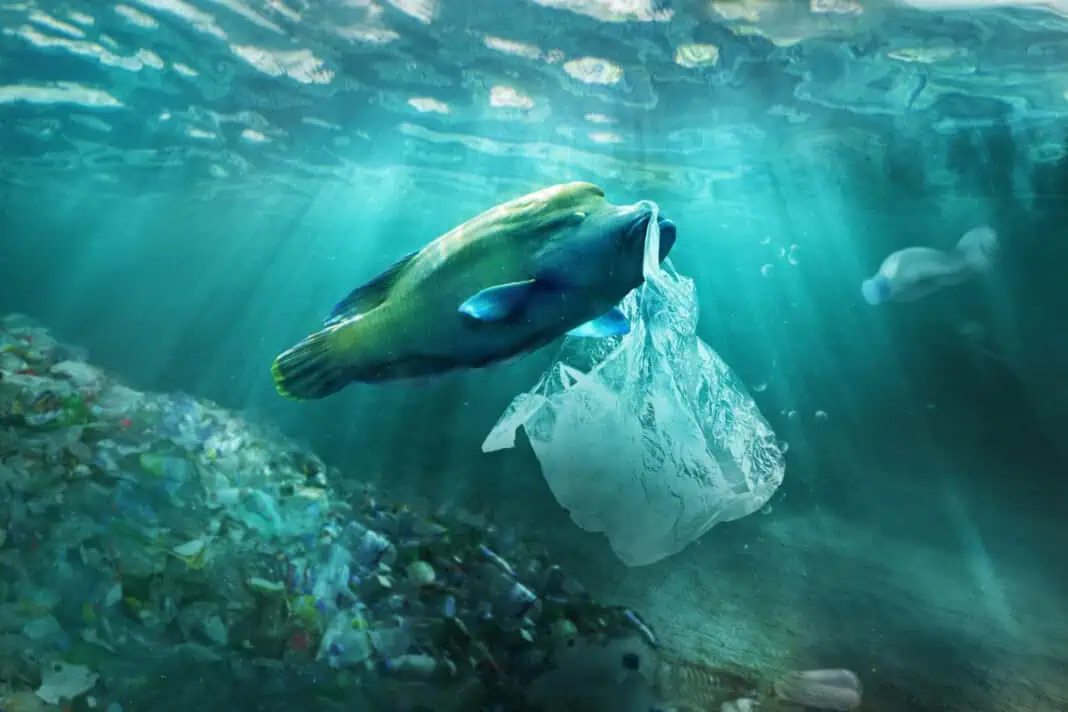
Today is Earth Day. One billion people across 193 countries mark it. Most will never see what divers see – plastic on every reef, fibres in every water column, waste where there should be wildlife.
This year’s theme is Our Power, Our Planet. It’s a call to action, not a slogan. And for the diving community, it points at something most divers have never considered: the environmental cost of the kit they use to explore the ocean in the first place.
The Problem Beneath the Surface
You can see macroplastics – bottles, bags, fishing line. What you can’t see is far worse.
Synthetic clothing – polyester, nylon, acrylic – sheds plastic fibres every time it goes through a washing machine. These microfibres are too small for most wastewater treatment plants to catch. They pass straight through, into rivers, into the sea.
The scale is hard to comprehend. According to the IUCN, synthetic textiles are the world’s single largest source of primary microplastic pollution, accounting for 34.8% of all global releases into the ocean. That translates to roughly 500,000 tonnes of plastic microfibres every year – the equivalent of 50 billion plastic bottles.
Around 60% of all clothing produced today is made from plastic. Every garment. Every wash. Every year.
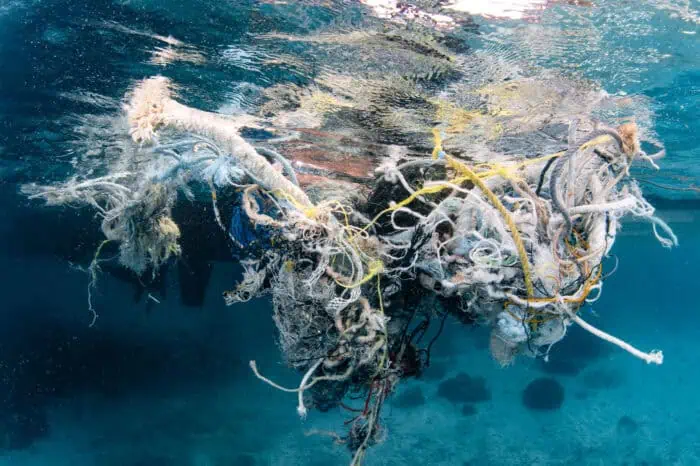
But clothing is only part of the picture. Traditional wetsuits are made from neoprene – a petroleum-based material that doesn’t biodegrade and requires energy-intensive manufacturing. Fins, bags, packaging, and sunscreen all carry their own environmental cost. For divers who care about the ocean, the gear locker deserves a closer look.
The Gear Is Changing
The good news is that the dive industry is responding. Slowly, but meaningfully.
The most significant development in sustainable dive gear right now is the Fourth Element Xenos ARC wetsuit. Fourth Element has replaced petroleum-based neoprene with Ocena® – a plant-based natural rubber foam made from FSC-certified plantation rubber and recycled car tyres. The manufacturing process uses 90% less energy than conventional neoprene production. The calcium oxide in the material comes from oyster shell by-products rather than limestone mining. All glues are water-based. The packaging is plastic-free.
We tested the 5mm version over eight dives in La Paz, Mexico. It’s not a compromise – it outperforms standard neoprene on stretch, compression resistance, and ease of donning. The sustainability credentials are genuine. Read our full review of the Fourth Element Xenos ARC.
Fourth Element’s commitment runs further than one wetsuit. Their Ocean Positive fins use 100% recycled polypropylene and recycled thermoplastic rubber, with all components recyclable at end of life. Their Thermocline suit uses nylon recovered from discarded fishing nets – ghost gear that would otherwise remain in the ocean indefinitely.
Other manufacturers are moving in the same direction. Patagonia builds its entire wetsuit range from Yulex, a plant rubber derived from FSC-certified hevea trees. Apeks now ships its VX1 mask with zero plastic packaging from production to delivery. These aren’t token gestures – they represent a shift in how the industry thinks about materials.
Fashion’s Linear Problem
The microfibre problem sits inside a bigger one. Fashion runs on a take-make-dispose model that was never designed to last.
The Ellen MacArthur Foundation puts it plainly. Every second, the equivalent of one truckload of clothing is burned or buried in landfill. Less than 1% of clothing worldwide gets recycled into new clothing. The rest ends up incinerated or underground.
For divers, this isn’t abstract. Textile dyes contaminate coastal waters. Synthetic debris accumulates in ocean gyres. Microfibres enter the marine food chain and work their way up it – into the fish we photograph, the ecosystems we depend on, and ultimately into us.
Our Power, Our Planet
Earth Day 2026 carries a clear message from EARTHDAY.ORG: environmental progress is not built by governments alone. It’s built by people who choose to act.
Choosing plastic-free clothing is one of the most direct actions available. Organic cotton biodegrades. It doesn’t shed plastic. It doesn’t persist in the food chain for 500 years. DeeperBlue clothing is made entirely from organic cotton, produced using renewable energy, and shipped in plastic-free packaging. Every piece is also designed to come back – worn-out garments go back via a freepost return scheme and are remade into new products. Nothing goes to landfill.
Beyond clothing and wetsuits, small choices add up. Stream2Sea makes reef-safe mineral sunscreen in packaging made from sugarcane resin and recycled milk jugs – the only sunscreen independently tested as safe for coral larvae. Swapping chemical sunscreen for a reef-safe alternative is one of the easiest changes any diver can make.
What You Can Do Today
Earth Day is one day. The ocean plastic problem runs 365 days a year.
Here’s where to start:
- Check your wardrobe. How much is polyester, nylon, or acrylic? Replace it gradually with natural fibres.
- Look at your wetsuit. When it’s time for a new one, consider plant-based alternatives like the Xenos ARC or Yulex options.
- Switch your sunscreen. Reef-safe mineral formulas protect coral as well as your skin.
- Use send-back schemes. If your clothing or gear has a circular take-back programme, use it. That’s the system working as designed.
- Tell people. The microfibre problem remains almost entirely unknown outside environmental circles. Divers are well placed to change that.
This year’s Earth Day theme is right. Power sits with people – but only if they use it.
The ocean absorbs the consequences of what the fashion and gear industries produce. Divers know those consequences better than most. Today is a good day to act on that knowledge.
DeeperBlue clothing is made from organic cotton, produced using 100% renewable energy, and designed to be sent back and remade. Use code EARTH10 for 10% off until 23rd April at deeperblue.store.
Our partner Teemill who produce and ship our clothing did a TED talk on the circular economy that you can watch below.
FAQ
What are microfibres and why are they harmful to the ocean?
Microfibres are tiny plastic particles shed by synthetic clothing - polyester, nylon, and acrylic - during washing. They are too small for most wastewater treatment plants to filter out, so they pass directly into rivers and the ocean. Once there, they enter the marine food chain, have been found in fish tissue, and accumulate up the food chain into humans. The IUCN estimates synthetic textiles account for 34.8% of all primary microplastic pollution in the world's oceans.
How much microplastic does synthetic clothing release into the ocean each year?
Around 500,000 tonnes of plastic microfibres from synthetic textiles enter the ocean every year - the equivalent of 50 billion plastic bottles. This makes synthetic clothing the single largest source of primary microplastic ocean pollution globally, according to IUCN research.
Is traditional neoprene bad for the environment?
Traditional neoprene is made from petroleum - a non-renewable resource. Its production is energy-intensive and the material does not biodegrade at end of life. Most wetsuits end up in landfill. Sustainable alternatives now exist, including plant-based natural rubber foams like Ocena® and Yulex, which significantly reduce the environmental impact of wetsuit manufacturing.
What sustainable alternatives to neoprene wetsuits are available?
The Fourth Element Xenos ARC uses Ocena® - a plant-based natural rubber foam made from FSC-certified plantation rubber and recycled car tyres. It uses 90% less energy to produce than standard neoprene. Patagonia builds its wetsuits from Yulex, a plant rubber derived from FSC-certified hevea trees. Both materials offer comparable performance to conventional neoprene with a fraction of the environmental cost.
Does organic cotton clothing release microplastics when washed?
No. Organic cotton is a natural, plant-based fibre. It does not shed plastic microfibres during washing. Choosing clothing made from organic cotton rather than synthetic materials removes your laundry from the microplastic pollution pipeline entirely. Organic cotton also biodegrades at end of life, unlike synthetic fabrics which can persist in the environment for hundreds of years.
What is circular fashion and how does it reduce ocean pollution?
Circular fashion is a system where clothing is designed to be returned, remade, and reused rather than sent to landfill or incineration. Less than 1% of clothing worldwide is currently recycled into new clothing. A circular model keeps natural materials in use, eliminates waste, and removes the need to extract new resources. DeeperBlue clothing uses this model - worn-out garments are sent back via a freepost return scheme and remade into new products.
What is Earth Day 2026 about?
Earth Day 2026 falls on 22nd April and carries the global theme Our Power, Our Planet. Organised by EARTHDAY.ORG, the theme focuses on people-powered action to defend and restore environmental protections. Around one billion people across 193 countries take part in Earth Day events annually, making it the world's largest civic environmental event.
How can divers reduce their contribution to ocean plastic pollution?
The most direct actions are to replace synthetic clothing with natural fibre alternatives such as organic cotton, choose plant-based wetsuits rather than petroleum-based neoprene when it's time to replace gear, use reef-safe mineral sunscreens in sustainable packaging, and take part in clothing or gear take-back schemes that keep materials in a circular loop. Because divers witness ocean plastic first-hand, the community is well placed to drive wider awareness and behaviour change.