


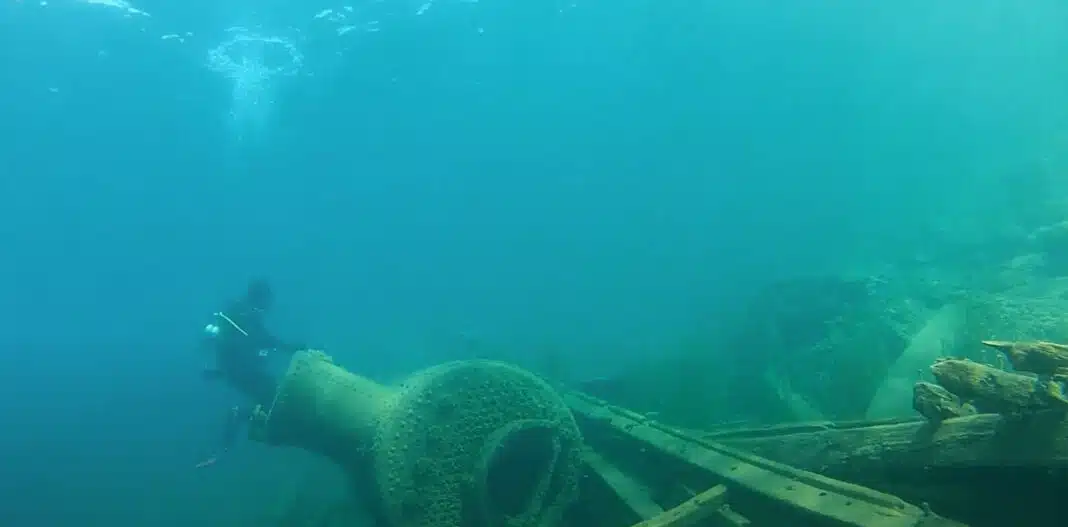
A team of scientists, engineers and eight students from the University of Rhode Island has completed the first comprehensive survey of known shipwrecks within the Lake Ontario National Marine Sanctuary.
The team deployed URI’s news remotely operated vehicle (ROV), Rhody, to document 17 wrecks on the lakebed. Interestingly, during the process the survey also uncovered several previously uncharted wrecks.
Rhody is full of cutting-edge technology and features a VOYIS Discovery Stereo Camera. This can capture dual high-resolution images of each site. These can then be used to build photorealistic 3D models with centimeter-level accuracy.
The expedition is funded by NOAA’s Ocean Exploration Cooperative Institute and supported by NOAA maritime archaeologists. Data generated by the survey will help inform conservation and preservation strategies for Lake Ontario’s submerged heritage.
Commenting on the work, OECI Associate Director Jason Fahy stated:
“We needed something with a small form factor, making it easy for a student team to mobilize. Rhody is small enough to be carried by two people, but capable enough to host the high-end, powerful sensors we typically utilize in deep ocean exploration.
It’s critically important to provide students with experience that translates into skills required in today’s ocean-facing industries. Now is the time for URI to lean into the massive demand from our students for hands-on learning, and at the same time, produce graduates who will bring important and unique skills to industry.
It was this detailed context that made each wreck real and left me pondering questions bigger than what was on the screen.”
While URI’s Ashly Martinez Rodriguez, a rising third-year student majoring in computer engineering and Japanese through URI’s International Engineering Program, added:
“Through this expedition, I’ve gained hands-on experience in all the areas I … was interested in learning about.”

