


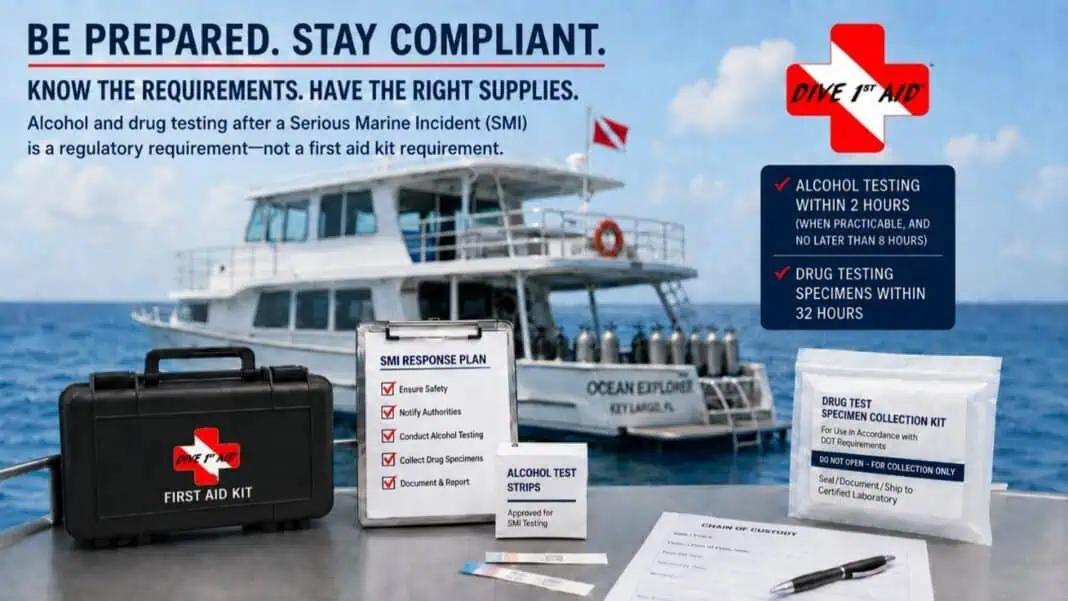
Dive 1st Aid is urging commercial dive vessel operators to immediately review their onboard equipment and emergency procedures regarding mandatory post-incident drug and alcohol testing.
The warning follows recent US Coast Guard Certificate of Inspection (COI) examinations, where inspectors specifically requested to see alcohol test strips on board.
These inquiries have triggered widespread confusion across the commercial diving sector regarding whether alcohol-testing devices are standard components of a mandatory first-aid kit or fall under separate regulatory mandates.
Federal regulations stipulate that alcohol-testing devices are not required components of a standard onboard medical kit. Instead, post-incident chemical testing is strictly governed by a different statute. Under this, marine employers must conduct alcohol testing on all individuals directly involved in a Serious Marine Incident (SMI) within a strict two-hour window, while drug specimens must generally be collected within 32 hours.
Furthermore, any utilized testing devices must appear on the National Highway Traffic Safety Administration Conforming Products List and be administered by trained personnel.
To maintain operational clarity and prevent compliance failures during inspections, Dive 1st Aid and its parent company, Seaside Marine International Drug Co., are now supplying USCG-approved alcohol-testing devices and compliant drug-specimen collection supplies completely separate from their standard medical kits.
Commenting on the regulatory distinctions, Dive 1st Aid President Matt Seibert said:
“First-aid kit compliance and post-incident chemical-testing preparedness are separate regulatory considerations. When developing an SMI response plan, vessel operators should consider the vessel’s operating area, voyage duration, and access to qualified testing services. Dive 1st Aid can provide guidance and approved products to help support your vessels compliance.”

