


A new shark repellent could revolutionize longline fishing for tuna and swordfish.
The new invention by researchers at Florida Atlantic University’s Charles E. Schmidt College of Science repels sharks from the baited hooks, reducing bycatch and making the whole process safer and more economical.
Currently, shark bycatch is a problem with longline fishing. This has a negative impact on both the fishers and the sharks caught on the line. The new device is made of graphite and zinc. Both interact to create an electrical charge near the hook. This then repels the shark and persuades them to leave the hooks alone.
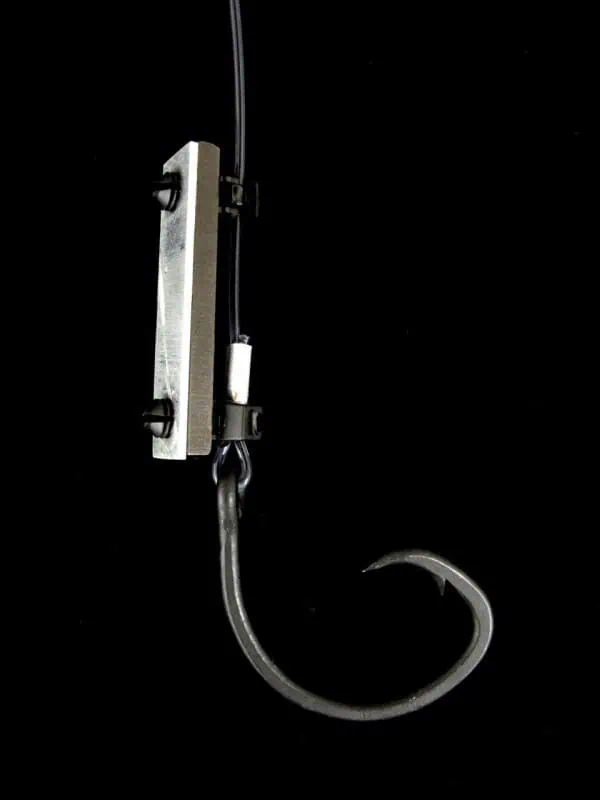
Commenting on the invention, Stephen Kajiura, senior author, inventor and a professor in the FAU Department of Biological Sciences, stated:
“Sharks have an incredible ability to sense even the smallest electric fields, and our tests show that this new approach can be used to keep them away from baited hooks. At the same time, important target species like tuna and swordfish are completely unaffected. What makes this approach so exciting is its practicality – zinc and graphite are inexpensive, widely available, and already familiar to fishers because zinc is commonly used to prevent corrosion on boats. This means it could be adopted quickly and cost-effectively, providing a real solution to reduce shark bycatch while supporting sustainable fisheries.”
Discussing how the project can be scaled, Kajiura added:
“Our approach could be scaled up to pelagic longline fisheries, where millions of sharks are caught as bycatch annually. Even a 60% to 70% reduction in shark bycatch, like that observed in Florida demersal trials, could have a dramatic impact on global shark populations. The zinc/graphite treatment offers a practical, affordable, and environmentally responsible tool for reducing shark bycatch while maintaining commercial catch rates.”
You can find the original research here.

