


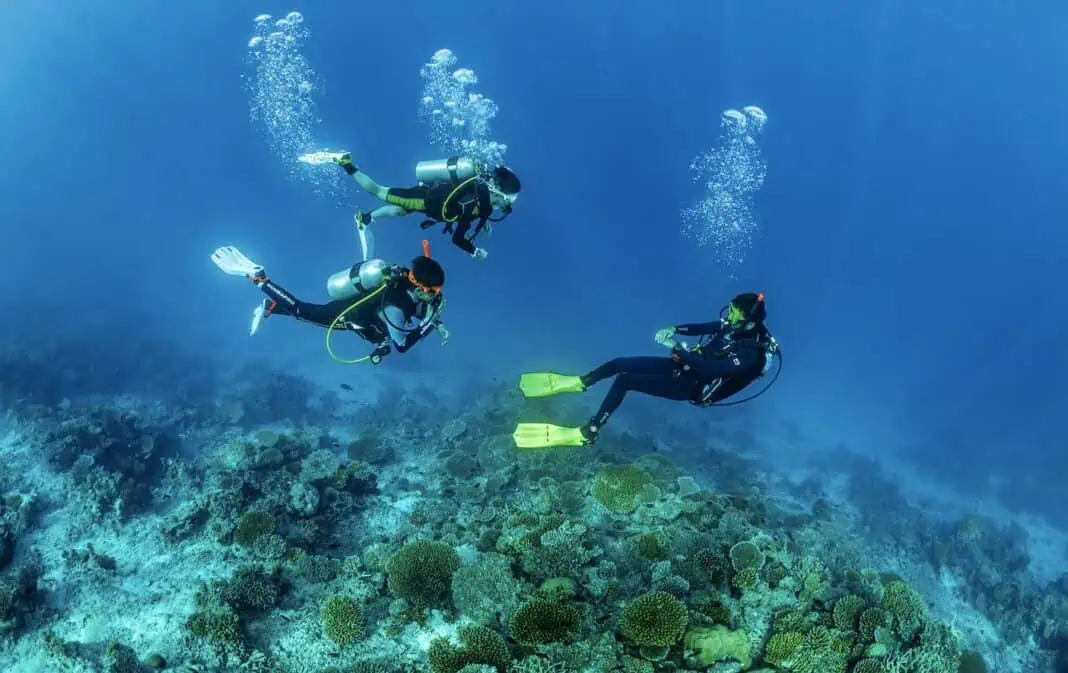
A new international survey highlights a significant link between scuba diving and the psychological well-being of young adults.
The survey’s results were released by the One Health Underwater project to mark European Mental Health Week (May 4–11, 2026).
Funded by Erasmus+, the project led by the French Federation for Underwater Studies and Sports (FFESSM), Divers Alert Network Europe and the Haute École Bruxelles-Brabant (HE2B) explores diving’s potential for youth well-being, integrating research, inclusion the environment and health.
Scuba diving is being studied as an innovative approach to optimizing youth mental health, based on moderate physical activity, immersion in a natural environment, breath control, concentration and the social aspect of the activity.
The survey was conducted among 1,669 divers aged 18 to 29, in six languages. The questionnaire, consisting of 176 questions and based on several validated scientific scales, is one of the most comprehensive tools ever deployed in the field of diving. The study focused on regular divers rather than occasional divers: more than half of the respondents dive at least once a month, 77% practice scuba diving, and 21% combine scuba diving and freediving.
While European indicators point to a continuous decline in mental health among young people (increased anxiety, sleep disorders, irritability or depressive episodes), the study’s consolidated results paint a different picture for the young divers surveyed.
In general, participants exhibit a high level of mental well-being, with Warwick-Edinburgh Mental Well-being Scale scores above 55/70. More than 80% report regularly feeling joyful, relaxed, able to think clearly, or open to new experiences. Analysis of the mood profile confirmed this trend: positive adjectives (active, calm, attentive, fit, relaxed) outweighed negative emotional states. Over 90% of respondents describe themselves as active, 86% as calm and attentive, while indicators of tension or irritability remain in the minority.
Additionally, 93% of participants consider diving an important activity in their lives, and more than one in two divers dove at least once a month, suggesting that this is not a one-time experience but a practice integrated into a genuine lifestyle.
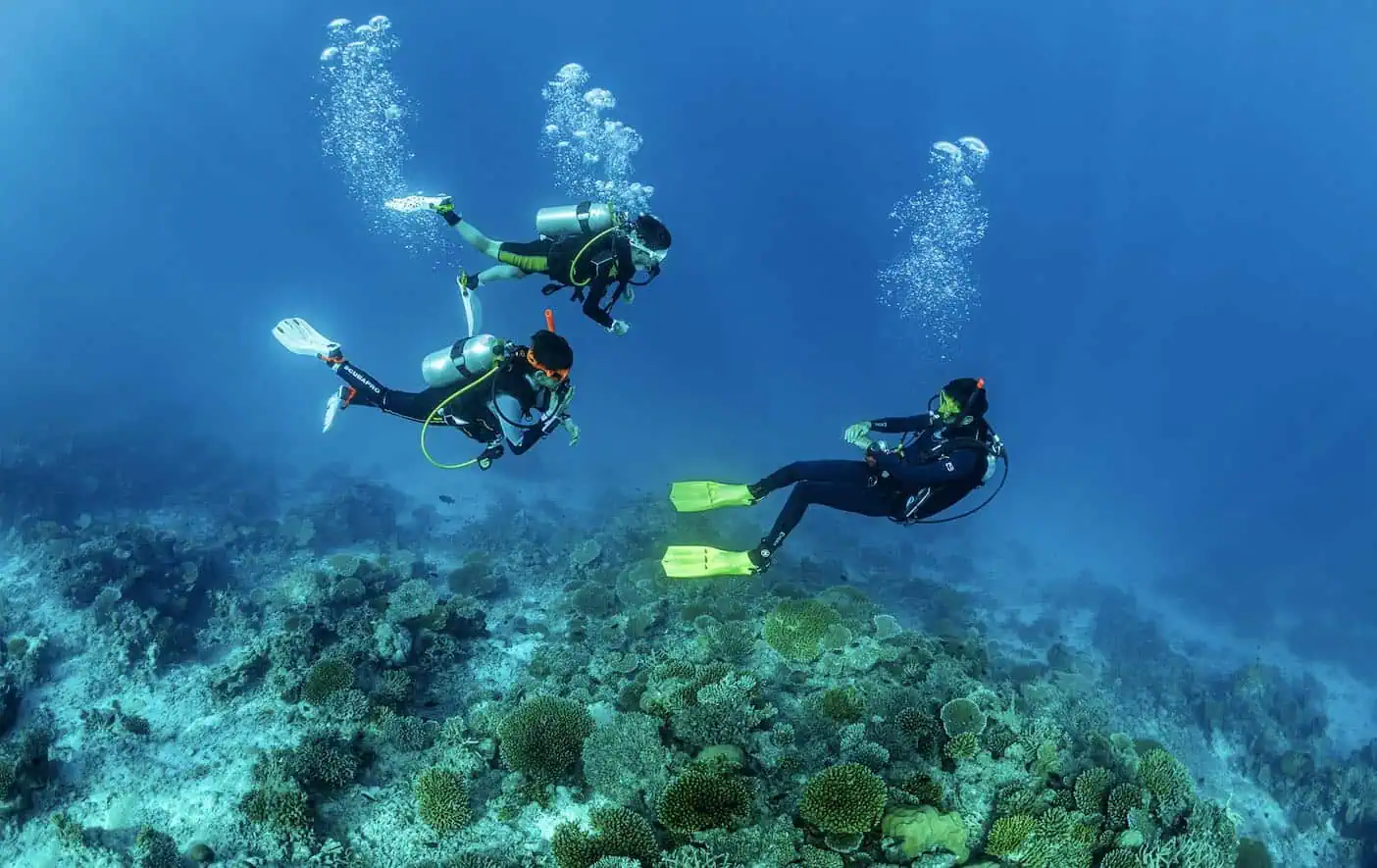
Beyond the purely athletic dimension, these results reinforce the hypothesis that diving engages factors recognized for their impact on well-being: immersion in a natural environment, controlled breathing, sustained attention, self-confidence, cooperation with a dive buddy and emotional regulation.
Prof. Costantino Balestra, vice president of research & education at DAN Europe, said:
“Diving offers a unique setting where physical activity, mindfulness, and emotional regulation come together.”
While FFESSM President Dr. Frédéric Di Meglio added:
“Diving under the right conditions contributes to mental well-being by engaging the parasympathetic nervous
system, which helps the body relax and heal.”
To take this further, the project will launch a new phase this summer in France, with a camp organized at a UCPA center. A cohort of divers will be monitored over a set period using a longitudinal methodology: each participant will serve as their own control, with repeated assessments via questionnaire and analysis of salivary biomarkers.
Subsequent developments will aim to integrate diving into supervised, inclusive health-and-fitness programs tailored to vulnerable youth, and then to disseminate educational resources and final results to professionals, policymakers, and the general public.
“Ultimately, One Health Underwater aims to establish scuba diving as a credible and innovative alternative to conventional approaches to well-being, particularly for the most vulnerable young people. Beyond psychological well-being, this approach also promotes resilience, active citizenship, and respect for the marine environment among younger generations.”

