


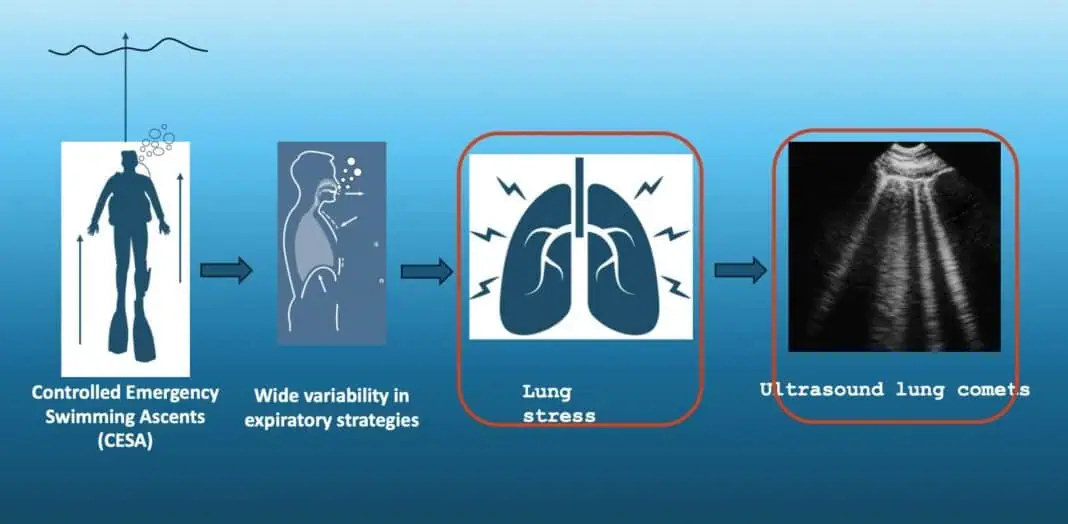
New research has shown that Controlled Emergency Swimming Ascents (CESAs) can induce hidden lung stress in divers, even when they present no symptoms.
CESAs are typically taught as part of most open-water diver training. They aim to prevent lung over-expansion during out-of-airway emergency ascents. However, to this day, their pulmonary risks have remained poorly documented.
Case reports have linked CESAs to everything from mild cough and hemoptysis to life-threatening pneumothorax, pneumomediastinum and cerebral arterial gas embolisms. Advocates insist these injuries stem from improper technique, such as failure to exhale continuously. They also stress the importance of vigilant instructor oversight.
A team of French diving doctors suspected that mechanical factors beyond technique might also play a role. The doctors were:
- Olivier Castagna
- Vianney Hamar
- Bruno Schmid
- Arnaud Druelle
The team conducted a study that captured ultrasound lung comets (ULCs) before and after experimental dives, revealing extravascular lung water associated with pulmonary edema. The results were interesting since the team found that the degree of extravascular fluid varied markedly among individuals, suggesting personal susceptibility to pressure and volume shifts during ascent.
The team behind the study stated:
“These findings indicate that even trained divers do not consistently match expiratory effort to gas expansion, potentially increasing mechanical stress on the lungs. CESA training may therefore expose healthy individuals to silent alveolar stress, highlighting the need for improved monitoring tools and individualized ventilatory assessment during ascent training. These findings challenge the assumption that the absence of symptoms equates to the absence of injury. They support the emerging concept of ‘silent alveolar damage’, which may extend beyond diving physiology to broader clinical settings.”

